
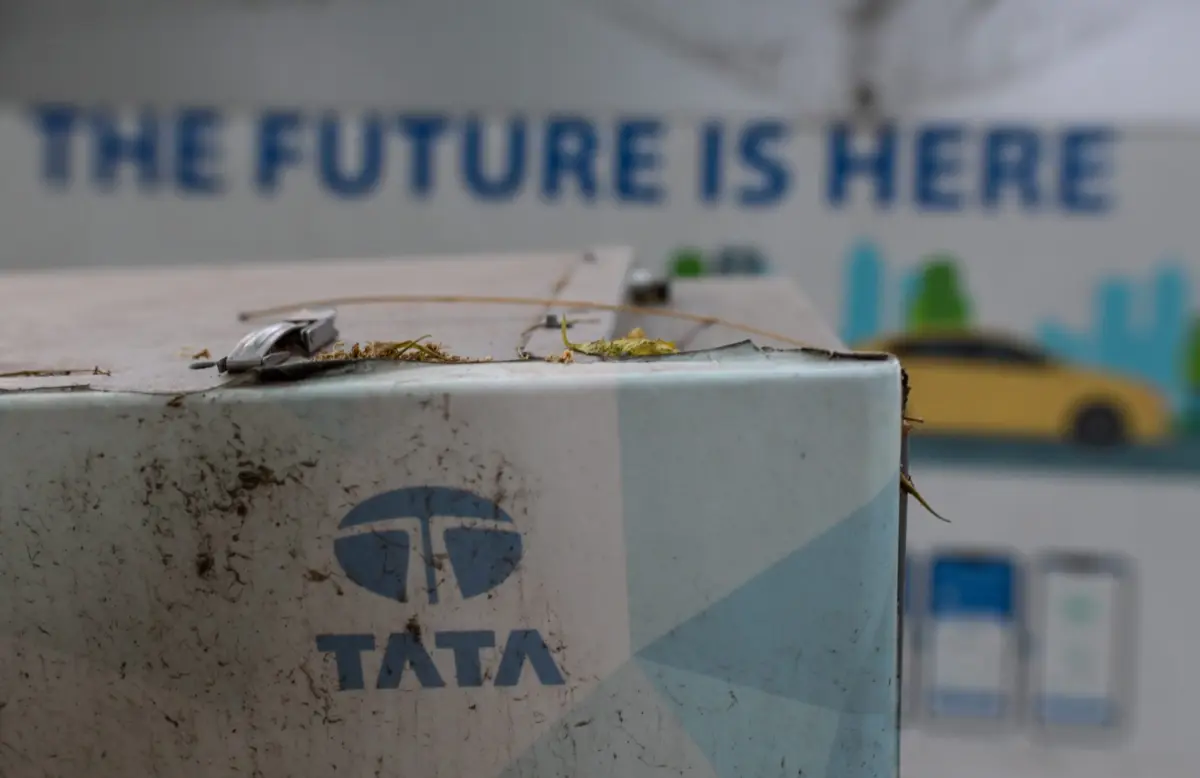
An unprecedented power struggle has erupted at the very top of one of India’s largest and most historic business conglomerates, pitting the board of directors of its holding company, Tata Sons, against its majority shareholder, Tata Trusts. The bitter feud, which has sent shockwaves through Indian corporate circles, threatens to redefine the governance and future trajectory of a 158-year-old corporate empire whose reach extends into nearly every corner of daily life in India and across the globe.
The rift burst into public view after the board of Tata Sons voted to extend the chairmanship of N Chandrasekaran and signaled its intention to consider publicly listing the holding company. The moves directly challenge the wishes of Tata Trusts, the family-linked philanthropic entity that controls a majority 66 percent stake in Tata Sons.
The battle over Chandrasekaran’s leadership and the potential initial public offering (IPO) of Tata Sons is far more than an internal governance dispute inside Bombay House, the iconic Mumbai headquarters of the Tata Group. According to investment advisory firm InGovern, the publicly listed companies under the Tata umbrella boast a collective market capitalization of $277 billion. Beyond their financial weight, these firms touch the lives of 17.7 million retail shareholders, alongside major institutional investors including pension funds, insurance giants, and mutual funds.
As the fallout threatens to spill into the Indian court system, observers and investors are closely examining the motives, legal arguments, and structural tensions driving this unprecedented boardroom clash.
How big is the Tata Group?
To understand the magnitude of the current feud, one must grasp the vast footprint of the Tata Group. The conglomerate’s commercial operations span a wide array of vital industries, including information technology, automotive manufacturing, steel production, power generation, commercial aviation, chemical processing, and consumer retail products.
At the center of this industrial network sits Tata Sons, operating as the principal holding and investment company for the entire enterprise. Underneath it are 26 publicly traded firms, including global powerhouses such as Tata Consultancy Services (TCS) and Tata Motors. Collectively, these enterprises generate immense global revenue, operate in more than 100 countries, and command a market value of $277 billion.
The origin of this vast commercial empire traces back more than 150 years to modest beginnings. Nusserwanji Tata, born into a Parsi priest’s family in the state of Gujarat, relocated to Mumbai—then known as Bombay—in the mid-19th century to launch a trading enterprise. He subsequently expanded into trade networks with China. His son, Jamsetji Tata, built upon these early foundations, developing the family enterprise into a formidable industrial group through lucrative trading ventures in cotton and opium. During that era, China’s Qing rulers had banned opium, but Nusserwanji established methods to navigate the illicit trade.
The defining turning point for the family’s wealth occurred in 1861 with the outbreak of the United States Civil War. As American cotton exports ground to a halt, global market disruptions sent the price of Indian cotton soaring, generating massive fortunes for Bombay merchants, including the Tata family.

Over successive generations, those commercial fortunes were systematically reinvested to construct an industrial powerhouse. Following Jamsetji Tata’s death in 1904, his sons Dorabji and Ratanji Tata assumed stewardship of the expanding business. It was during this developmental period that the family established charitable trusts, transferring significant equity to them and making the philanthropic trusts the dominant shareholders of Tata Sons.
In 1938, JRD Tata assumed the chairmanship, guiding the group through a major transformation into a modern, diversified enterprise. Under his leadership, the group expanded into crucial national industries, pioneering commercial aviation through the creation of India’s flagship carrier, Air India, alongside major ventures in chemicals and heavy engineering.
In 1991, as India embarked on sweeping economic liberalizations, Ratan Tata succeeded JRD as chairman. Under Ratan Tata’s guidance, the conglomerate consolidated its sprawling operations under a unified corporate structure and executed an ambitious international expansion. High-profile international acquisitions—including iconic British brands Tetley Tea, Corus Steel, and luxury automaker Jaguar Land Rover—placed the Tata name on the global stage.
In recent years, the group has continued to adapt to global technology shifts, making aggressive moves into next-generation manufacturing. Today, Tata operates major assembly lines for Apple’s iPhone in India and is heavily investing in advanced semiconductor fabrication and chip-assembly facilities.
For decades, Ratan Tata provided the critical bridge between the commercial and philanthropic arms of the empire, serving simultaneously as chairman of both Tata Sons and Tata Trusts. However, following his death in 2024, the structural partition between the holding company’s management and its charitable owners began to fracture, exposing deep institutional fault lines.
So what’s Tata vs Tata about?
The current conflict came to a head on September 17 during a pivotal board meeting of Tata Sons. The board voted 4-to-1 to reappoint N Chandrasekaran as chairman, explicitly defying the position of Noel Tata, the nominee representing Tata Trusts.
Noel Tata, the half-brother of the late Ratan Tata, was named chairman of Tata Trusts following Ratan’s death in late 2024. He currently serves as the sole senior executive from the founding family holding a high-level position within Tata Sons.
However, the disagreement over leadership is only one element of a deeper structural confrontation. The feud also centers on whether Tata Sons should be forced to list its shares on public stock exchanges and how to handle a proposed exit strategy for the Shapoorji Pallonji Group, the company’s second-largest shareholder.

Chandrasekaran’s reappointment
The dispute over the executive leadership of Tata Sons began when the 68-year-old Chandrasekaran indicated he did not intend to seek an additional term as chairman once his current tenure ends in February 2027. However, the Tata Sons board formally asked him to reconsider his departure in the "larger interests" of the group—a request Chandrasekaran subsequently accepted.
Noel Tata strongly condemned the board’s vote, declaring the reappointment "illegal" under Tata Sons’ articles of association. In a public statement, Noel Tata asserted that the board nominees designated by Tata Trusts were contractually and procedurally required to vote in unison.
While Noel Tata voted against Chandrasekaran’s extension, the second nominee from Tata Trusts, Venu Srinivasan, broke ranks and voted in favor of the board’s resolution. With the trust nominees divided, Noel Tata’s opposition was overriden, setting the stage for a bitter legal challenge.
Listing of Tata Sons
Adding further urgency to the internal dispute is an impending regulatory deadline from the Reserve Bank of India (RBI). Under central bank rules, Core Investment Companies and financial institutions holding assets in excess of $10.45 billion are required to go public and list their shares on stock exchanges.
Tata Sons previously attempted to sidestep this regulatory mandate by applying to deregister as a non-banking financial company (NBFC). However, just days prior to the crucial board meeting, the RBI formally rejected Tata Sons’ application, effectively removing its regulatory exemption and pushing the holding company toward an obligatory public listing.
The corporate structure of Tata Sons has historically been an anomaly in global finance: while many of its operating subsidiaries are publicly traded blue-chip companies, the master holding company at the peak of the $277 billion empire has remained closely held and exempt from public market reporting requirements.
Following the RBI’s rejection, the board of Tata Sons affirmed that it would take the necessary steps to comply with regulatory standards. Noel Tata, speaking on behalf of Tata Trusts, firmly opposed a public listing. He argued that subjecting Tata Sons to quarterly earnings pressures and public market dynamics would fundamentally alter the unique, public-service ethos of an institution designed primarily to fund broad philanthropic causes.
Shapoorji Pallonji’s proposed exit
The boardroom crisis is further complicated by the position of the Shapoorji Pallonji (SP) Group, an infrastructure and construction conglomerate that holds an 18.4 percent stake in Tata Sons, making it the holding company’s second-largest shareholder.

The SP Group, currently managing significant corporate debt, has been actively seeking ways to monetize its substantial equity in Tata Sons. According to statements from Tata Trusts, Noel Tata presented a structural proposal to facilitate the sale of a portion of the SP Group’s holding, valued at approximately $2.61 billion. Tata Sons has not officially commented on the buyout proposal.
The dynamics of this proposal are intertwined with family ties and business interests. Shapoor Mistry, the head of the SP Group, is the brother-in-law of Noel Tata. Despite these family connections, the SP Group’s commercial interests align with the board of Tata Sons on key strategic issues: the SP Group strongly supports a public listing for Tata Sons and opposes Noel Tata’s attempts to prevent the company from going public.
What does the dispute mean for India’s economy?
At the core of the debate engrossing India’s business community is whether an enterprise of Tata Sons’ size can remain structured as a private entity sheltered from public market oversight.
In defending his opposition to a stock market listing, Noel Tata stressed the historical civic role of the group, stating that the Tata enterprise "was conceived as a national service carried on through business." He contended that maintaining Tata Sons as a privately held holding company has enabled the conglomerate to prioritize long-term national development and charitable giving over short-term financial returns, allowing it to "act repeatedly in ways that a purely commercial calculus would not have supported."
In contrast, independent economic analysts argue that statutory obligations must apply equally across the corporate landscape. Santosh Mehrotra, an Indian development economist, emphasized that regulatory mandates should not be bypassed by major conglomerates. "There is a law for everyone, and Tata cannot be an exception to that," Mehrotra noted.
Mehrotra observed that Indian industrial policy over the past decade under Prime Minister Narendra Modi has allowed premier corporate empires—including those of billionaires Gautam Adani and Mukesh Ambani—to expand their reach across sectors in a historically unprecedented manner.
"India’s biggest business houses have grown horizontally, capturing all sectors, which have come at the cost of people below them in the pyramid," Mehrotra said. He argued that this high degree of market concentration across multiple industries creates broad economic pressures. "That means that the core inflation is being driven essentially by these handful of businesses because their horizontal and vertical control gives them the ability to mock up prices that are unprecedented in our economy’s history while their profits mount."
From this perspective, Mehrotra suggested that while corporate analysts focus on internal boardroom maneuvers, everyday citizens are primarily affected by the regulatory framework governing market concentration.

Governance experts have similarly argued that systemic transparency is necessary for institutions of Tata’s scale. InGovern, a prominent corporate governance advisory firm, noted in an analytical paper that a master holding entity like Tata Sons, which exerts vast influence over critical national infrastructure and major consumer industries, cannot reasonably remain isolated from the disclosure standards, public scrutiny, and governance expectations required of systemically important industrial and financial conglomerates.
What’s the future of Tata Group?
With internal diplomacy breaking down, the resolution of the battle over Tata Sons appears headed for the courtroom. Both factions have retained top legal counsel to present their arguments.
Harish Salve, a former Solicitor General of India, has been tapped to lead the legal defense for the board of Tata Sons. Meanwhile, Abhishek Singhvi, a prominent lawyer and Member of Parliament from the opposition Indian National Congress party, is representing Noel Tata and Tata Trusts.
This is not the first time Bombay House has been consumed by a high-profile legal battle. Following Ratan Tata’s retirement as chairman of Tata Sons in December 2012, Cyrus Mistry was named to the top executive post, marking a rare instance where an executive from outside the immediate Tata family was selected to lead the holding company.
However, strategic disagreements quickly emerged between Mistry and Ratan Tata—who maintained control over Tata Trusts—regarding capital deployment, corporate strategy, and asset sales. The tension culminated in October 2016 when the Tata Sons board abruptly ousted Mistry as chairman.
Cyrus Mistry—the younger brother of SP Group chief Shapoor Mistry and the brother-in-law of Noel Tata—launched a multi-year legal challenge against his removal. The legal dispute culminated in 2021 when the Supreme Court of India ruled decisively in favor of Tata Sons. Notably, during that 2021 court fight, Salve and Singhvi worked on the same side, jointly representing Tata Sons against Mistry.
Reflecting on that precedent, Nitin Potdar, a senior corporate lawyer based in Mumbai, noted that the Supreme Court’s 2021 ruling affirmed "that the affirmative voting rights given to Tata Trusts-nominated directors are legal, valid and a globally accepted corporate norm for majority-trust-held institutions."
Addressing the split vote between the current trust nominees, Potdar clarified that a difference of opinion on the board does not automatically create an insurmountable legal obstacle. "Even if the two Tata Trusts nominees give their votes differently, that does not give rise to any [legal] deadlock," Potdar explained.

Expressing his view on the escalating confrontation, Singhvi shared on social media platform X that his reaction to the feud "is one of sadness and regret that these issues could not be solved amicably."
However, Singhvi emphasized that the underlying legal debate involves fundamental governance concepts regarding ownership rights. "In the ultimate analysis, fundamental rights of shareholder-owners cannot be nullified in the manner in which they have been," he wrote. "To stultify shareholder ownership rights would spell doomsday for corporate governance across hundreds of Indian companies."
Warning against a permanent structural rift between the philanthropic owner and the commercial holding company, Singhvi added: "Rupturing the over hundred years of Tata Trust and Tata Sons established hyphenated relationship and divorcing one from the other seems unthinkable."