
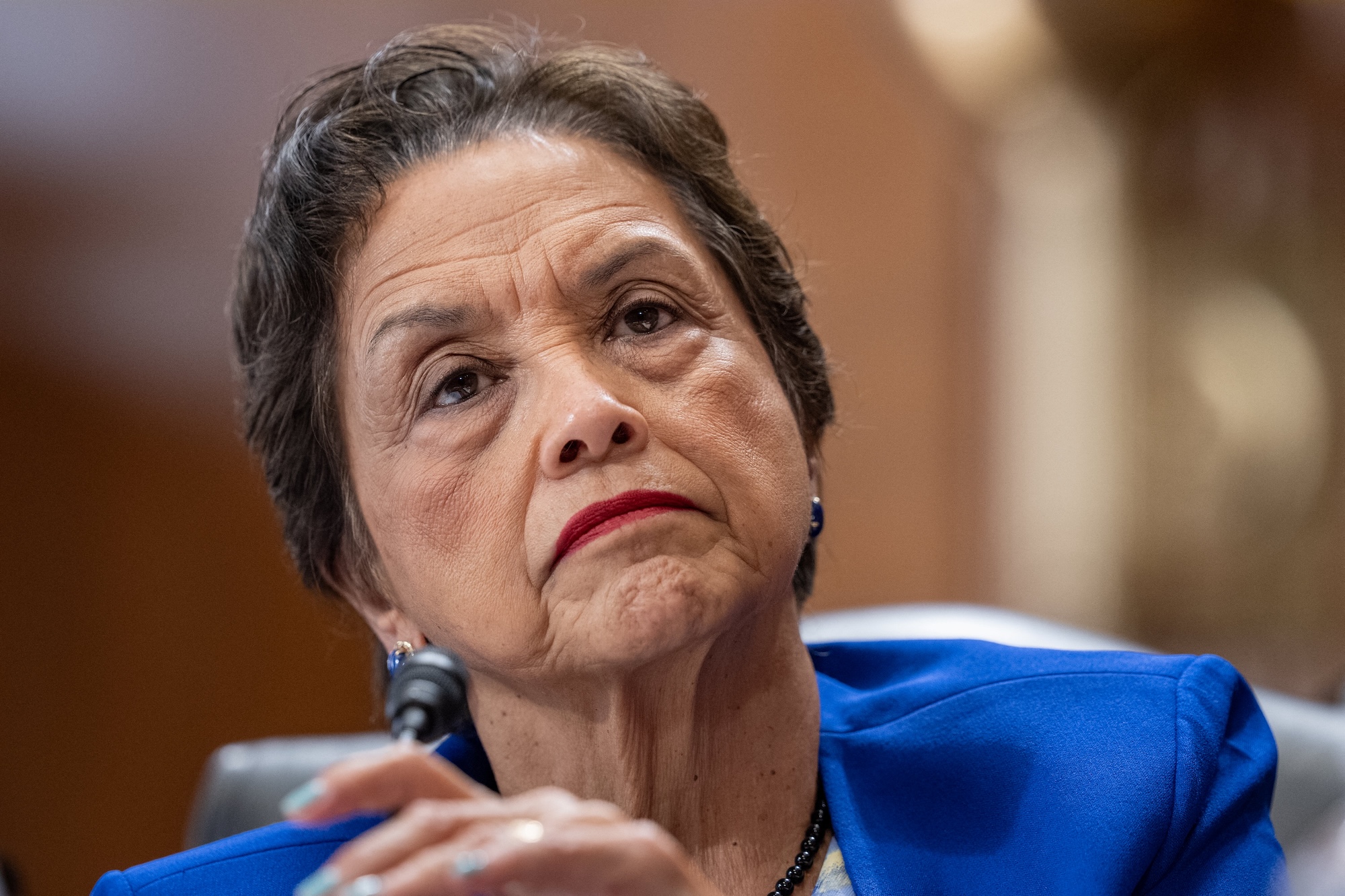
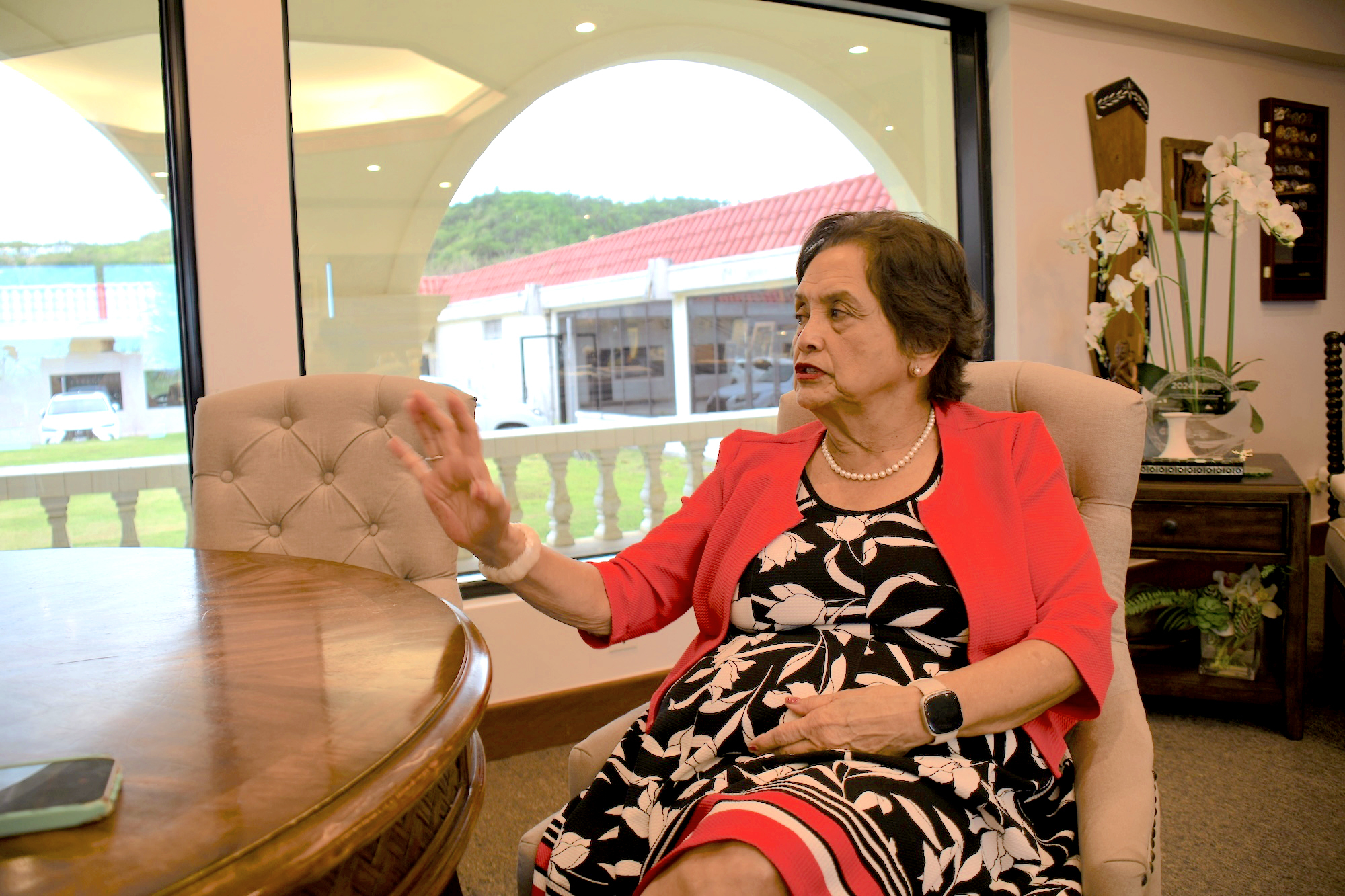
Lou Leon Guerrero, the governor of Guam, learned about the federal government’s sweeping plan to mine her people’s waters the exact same way everyone else did: by reading the news.
It was November 12, and an advisor had forwarded her an online news link after a journalist inquired about the initiative. Opening the page, Leon Guerrero was stunned by what she read. The Trump administration was quietly moving forward with plans to lease millions of acres of fragile seafloor surrounding the island to commercial mining corporations.
“I’ll never forget the date,” Leon Guerrero said from her office overlooking Agaña Bay, reflecting on the moment. “I had not heard anything about it.”
She immediately placed a call to David Apatang, the governor of the neighboring Commonwealth of the Northern Mariana Islands (CNMI), another U.S. territory facing the same maritime threat. “We were both very upset that we didn’t get any kind of warning,” she recalled. Shortly afterward, she contacted Bill Hague, an official in the Department of the Interior, the federal agency tasked with managing relations with territorial leaders and tribal nations.
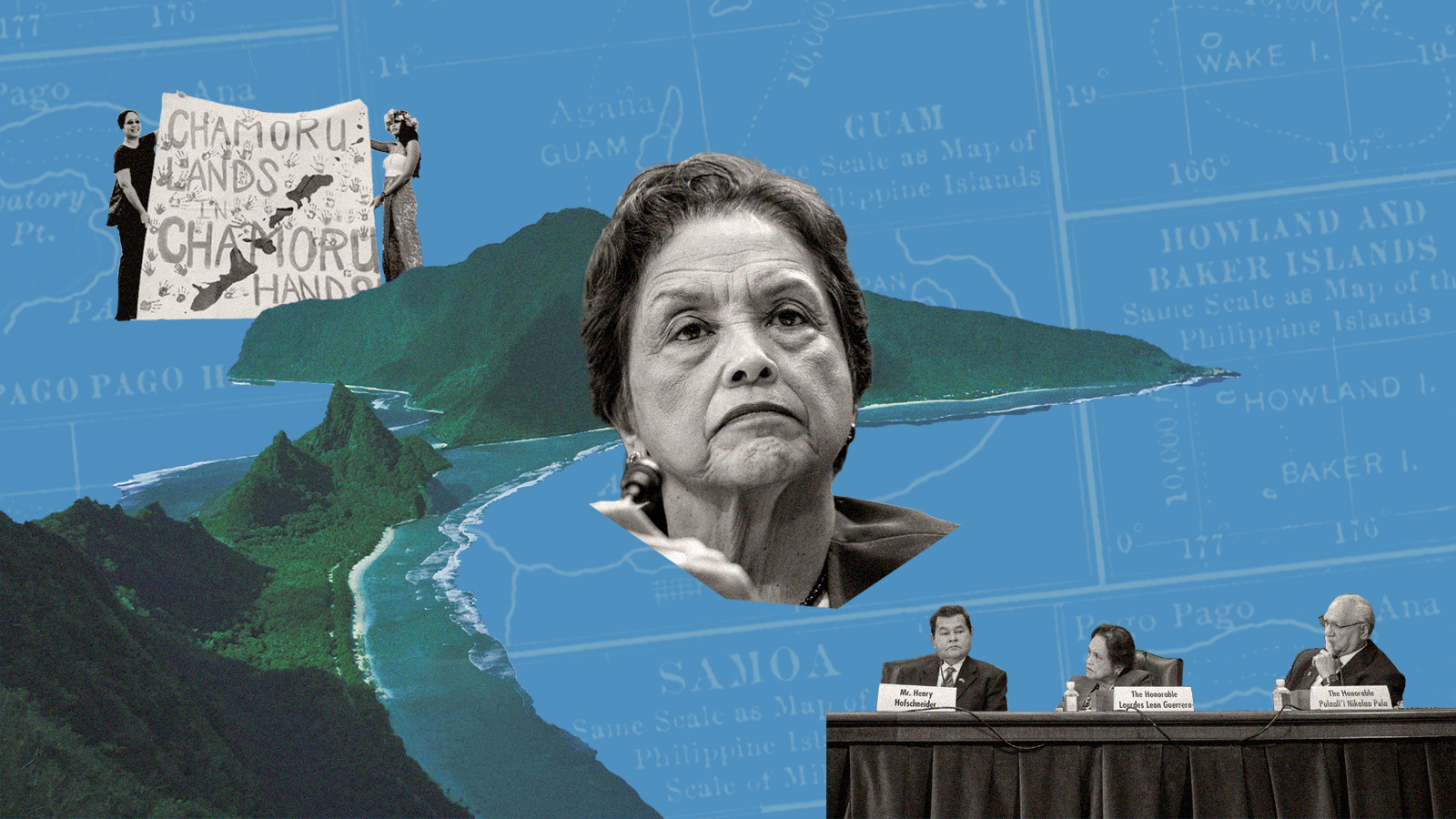
“I know we are a U.S. territory,” Leon Guerrero remembers telling him. “I know that you as the federal government can just come in and say, ‘I don’t care about what you guys say. We’re going to do it anyway.’ But still,” she added, “I want you to know I don’t support this.” According to Leon Guerrero, Hague reassured her that mining would never move forward without the local community’s support.
Nearly a year later, that is precisely what is happening.
A Federal Rush for Critical Minerals
The Trump administration is aggressively advancing plans to lease vast swaths of the Pacific seafloor to mining companies. The initiative forms part of a broader federal push to secure critical minerals and counter China, which currently commands a dominant share of the global supply chain. These targeted resources—including copper, manganese, nickel, and rare earth elements—are considered essential for advanced military technologies, renewable energy infrastructure, and electric vehicle batteries.
The administration’s strategy has targeted America’s Pacific island territories first. In July, the Marine Minerals Administration announced plans to auction access to 31 million acres of the continental shelf around American Samoa by mid-November. Just a month later, the agency revealed similar intentions for December, targeting more than 67 million acres on either side of the Marianas archipelago, which includes Guam and the CNMI. Roughly half of those designated acreage boundaries abut a protected national marine monument established by President George W. Bush.

Local leaders, residents, and environmental organizations have met these announcements with fierce opposition. Earthjustice, an environmental law nonprofit, recently filed federal lawsuits against the administration on behalf of conservation groups in American Samoa and the Mariana Islands. The legal challenges argue that the federal government is moving forward blindly, without understanding whether seabed mining will cause irreversible harm to protected marine species under the Endangered Species Act, such as whales and sea turtles.
The Marine Minerals Administration declined to comment on the ongoing litigation. However, agency spokesperson Brent Lawrence stated that the department would continue “to closely coordinate with territorial leadership” alongside community members in American Samoa, Guam, and the Mariana Islands.
Unlike neighboring Pacific island nations, which hold the sovereign authority to decide whether to allow industrial mining in their waters, Guam, American Samoa, and the CNMI remain subject to federal decisions frequently made without their consent. Under international law, Indigenous peoples possess the right to free, prior, and informed consent regarding projects affecting their ancestral lands and waters. The Trump administration, however, maintains that it holds the absolute legal authority to proceed under domestic U.S. law.
This unilateral decision highlights a century-old dynamic in which residents of U.S. territories are systematically denied a meaningful voice in governance, said Adi Martínez-Román, co-director of the advocacy group Right to Democracy. Territorial residents cannot vote for the president, lack voting representation in Congress, and see their fundamental right to self-determination routinely ignored.
“The territories are practically invisible to the general U.S. society and to public officials,” Martínez-Román said. “It is an insidious result of the colonial framework.”
Holidays and Typhoons Interrupted by Federal Decrees
For residents across the region, the announcements often arrive during moments of deep cultural significance or community hardship, compounding feelings of alienation.
On July 16, while staying with family in Manu‘a, American Samoa, J.V. Langkilde awoke at 2 a.m. It was Manu‘a Flag Day, a historic holiday commemorating the signing of a treaty that brought the islands under U.S. sovereignty more than a century ago. The family had volunteered to cater the day’s festivities, which featured a cricket tournament, a public parade, and a traditional raw fish competition.
The early hour meant Langkilde immediately noticed when his phone screen lit up the darkness with a text message alerting him to the news: On an anniversary dedicated to honoring the United States’ agreement to respect Samoan property rights, the federal government had announced it was accelerating deep-sea mining plans in American Samoan waters.
The subject dominated conversations throughout his visit. The foremost concern among Manu‘a residents, Langkilde said, is the profound disconnect of a distant corporate entity gaining property rights to the ocean floor without baseline impact studies.
“They think it’s a little bit backwards that some company who has no stake in the community here will have property interest on our ocean floor without a full understanding of impacts,” said Langkilde, who now works as an attorney for Earthjustice.
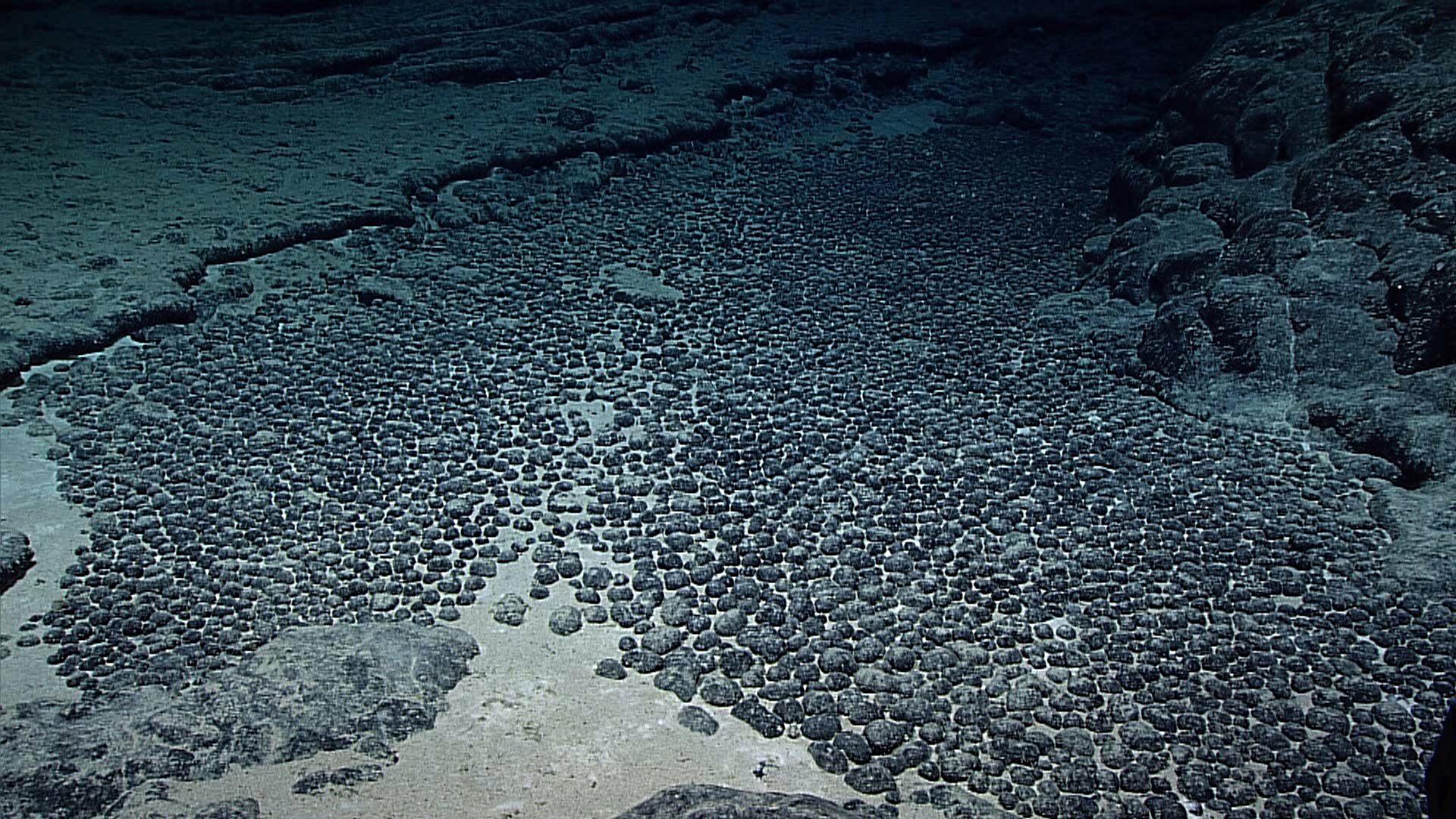
Commercial-scale deep-sea mining has never been executed, leaving scientific understanding of its environmental consequences sparse. Recent studies indicate that mining operations could generate massive sediment plumes capable of choking large pelagic fish like tuna, which accounts for more than 99 percent of American Samoa’s export economy. While mining companies dispute these findings, local communities remain deeply skeptical.
“The throughline of concern I hear is becoming a test site with no kind of guarantees for money being reserved, not just for revenue share, but even for environmental protection,” Langkilde noted, suggesting that safety bonds or emergency funds should be mandated.
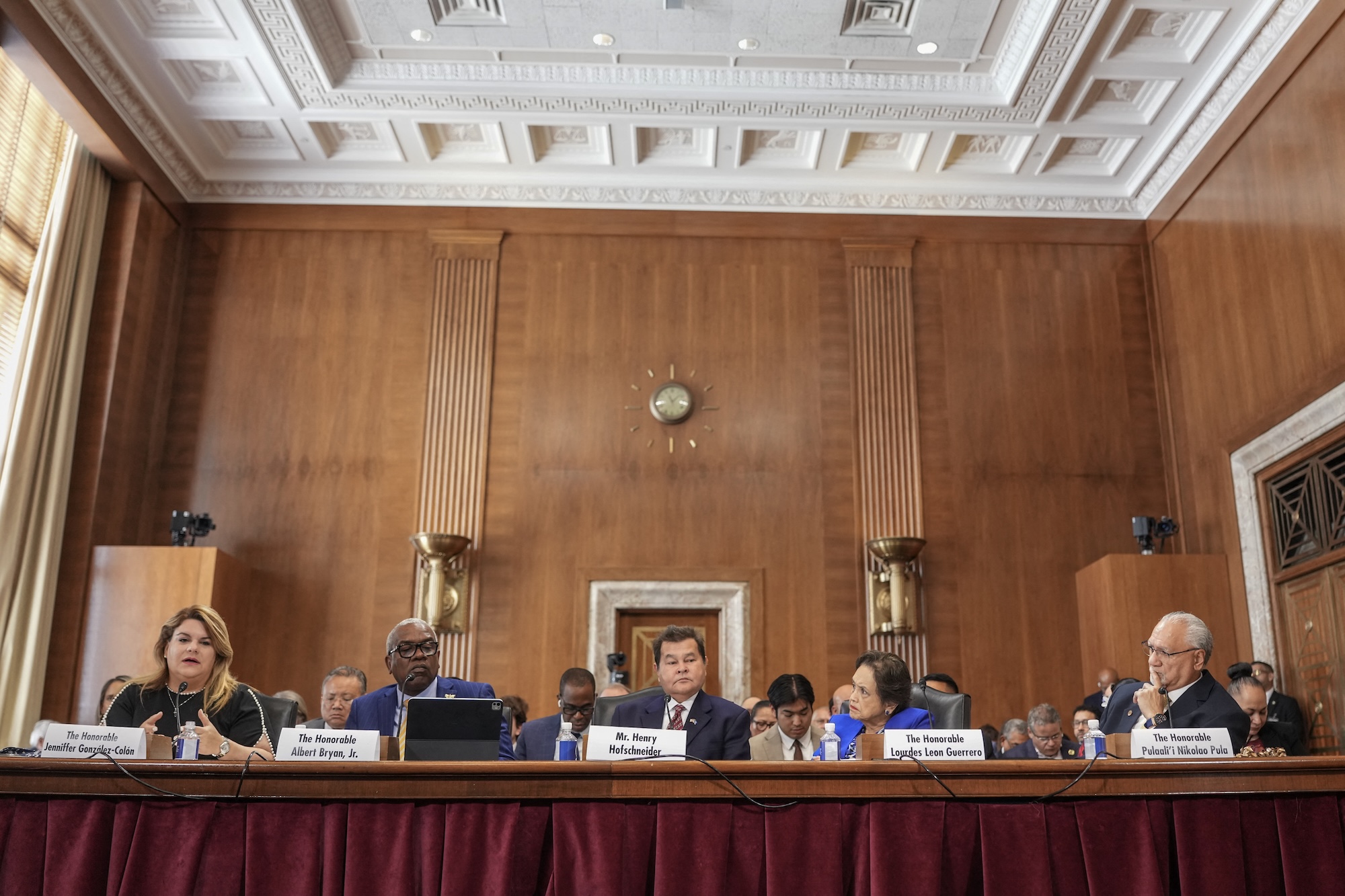
American Samoa’s governor, Pula‘ali‘i Nikolao Pula, has voiced identical concerns. In June 2025, he announced that the territorial government stood in unified opposition to mining, acting “in line with the express will of the people and the protection of American Samoa’s natural resources.” Five months later, the Trump administration responded by nearly doubling the size of the proposed lease area.
Because American Samoa is a U.S. territory, its local ban on seafloor mining extends only three nautical miles from shore—a tiny fraction of the 200-mile exclusive economic zone claimed by the federal government.
By contrast, independent Samoa, located just 40 miles to the northwest, retains complete sovereign control over its waters and plans to protect at least 30 percent of them. Samoa has also joined a growing coalition of Pacific nations calling for an international moratorium on deep-sea mining. As the first of a dozen Pacific island nations to achieve modern independence, its autonomy grants it full control over its maritime destiny.
Sovereignty and Economic Pressures Across the Pacific
While independent Pacific nations debate the industry—with countries like Nauru and Tonga sponsoring exploration contracts in international waters to diversify their economies—the majority of the region strongly opposes the practice. Palau has instituted a strict ban in its national waters, while Papua New Guinea and the Solomon Islands have expressed deep alarm over potential damage to fisheries and indigenous traditions. Independent nations also hold votes within the International Seabed Authority (ISA), a body established by a 1994 United Nations treaty to regulate international waters. Over 45 countries have joined calls for an international moratorium, a platform from which U.S. territories are excluded.

Federal law explicitly grants Congress the ultimate authority to overturn any legislation passed by territorial legislatures. “A decision about our islands is going to be made at a desk,” said Sabrina Suluai-Mahuka, a Right to Democracy fellow from American Samoa. “It does not make sense that we can’t have any say in how our futures go.”
For territorial leaders, the fight has involved frequent trips to Washington, D.C. Four months after the initial leasing announcement, Governor Lou Leon Guerrero traveled to the capital to press federal officials on the issue. Just three days after returning to Guam, she learned that the Bureau of Ocean Energy Management had doubled the proposed mining zone, bringing prospective sites even closer to the island’s shores without prior warning.
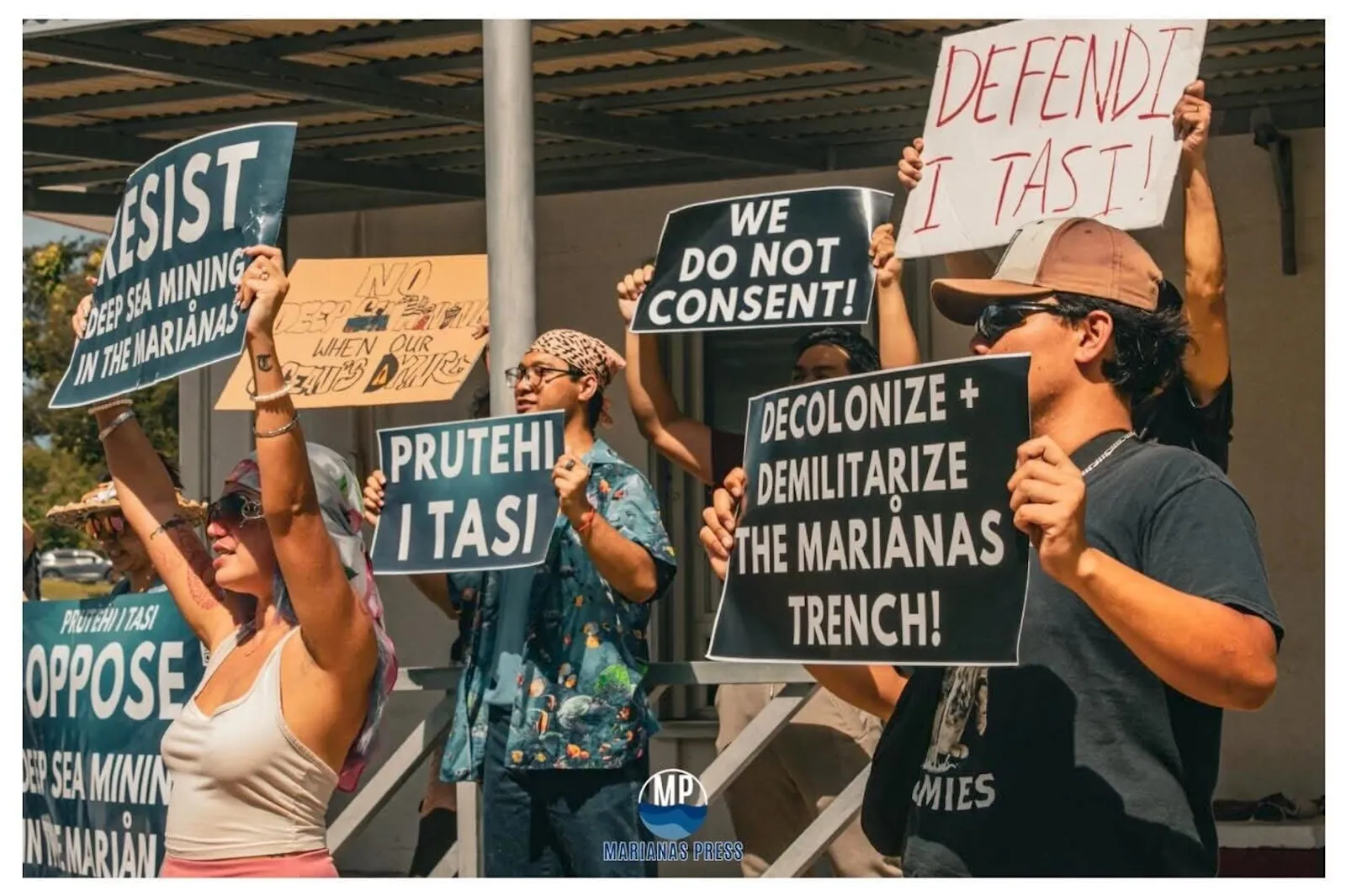
When she confronted Interior Department officials over the lack of communication, she was met with assurances of transparency, though local advocates remain unconvinced. Neildino Taisacan, an Indigenous Carolinian-Chamorro environmental advocate in the Marianas, pointed out that despite local leaders requesting a 120-day public comment extension to accommodate the holidays, the administration granted a mere 30 days.
“All we can do is just scream at the top of our lungs and say, ‘No, we don’t want this,’” Taisacan said.
Economic anxieties further complicate the debate. In American Samoa, a single StarKist tuna cannery supports roughly 2,000 jobs, making up 80 percent of the private-sector workforce. The CNMI has suffered a prolonged tourism slump compounded by severe climate disasters, including multiple super typhoons. In Guam, post-pandemic tourism declines have left the local economy heavily reliant on military presence. Without stable economic foundations, many residents are forced to emigrate for work.
Some mining proponents argue that revenue sharing could provide a much-needed economic lifeline. U.S. House Delegate Kimberlyn King-Hinds of the CNMI plans to introduce legislation demanding a 50-50 revenue split if the federal government forces the industry upon them. “If they’re going to shove this down our throats,” she said, “I want to be able to ensure that we have a backup plan, we have insurance, and that we actually benefit from the waters that surround us.”
Yet, as a non-voting delegate in Congress, King-Hinds cannot vote on the legislation, leaving the ultimate fate of any financial sharing agreements uncertain. Meanwhile, major mining advocates like The Metals Company have directed hundreds of thousands of dollars toward Washington lobbying efforts rather than community engagement.
Culture, Climate, and the Cost of Silence
For many residents, the physical and cultural toll of industrial mining outweighs any speculative economic gains. In April, Sheila Babauta, a former member of the CNMI House of Representatives and a prominent Indigenous Chamorro-Pohnpeian environmental advocate, spent hours huddled in a storage room with her parents and two-month-old son as Typhoon Sinlaku battered Saipan with 150-mph winds.
Weeks passed without electricity or running water. While clearing storm debris and caring for her infant, Babauta received digital messages alerting her that the federal government was accelerating its seabed mining push.
“I didn’t have capacity to even think about it,” she said. “All of the immediate needs definitely took priority over keeping track of what was happening with seabed mining.”
Pacific islands find themselves on the front lines of the climate crisis, dealing with rising seas and intensifying storms that drain local resources and energy, leaving residents with little bandwidth to fight distant federal mandates. This administrative exhaustion occurs as scientists warn that deep-sea mining could inflict permanent damage on fragile marine ecosystems that are intricately tied to Indigenous identities, traditional fishing, and ancient navigation practices.
John Castro, a traditional fisher and canoe navigation coordinator in Saipan, reflected on these cultural stakes while sitting beneath the thatched roof of a canoe house damaged by Typhoon Sinlaku. Traditional navigators across the Pacific rely heavily on marine life and predictable ocean patterns to traverse the open ocean using only the stars and waves.
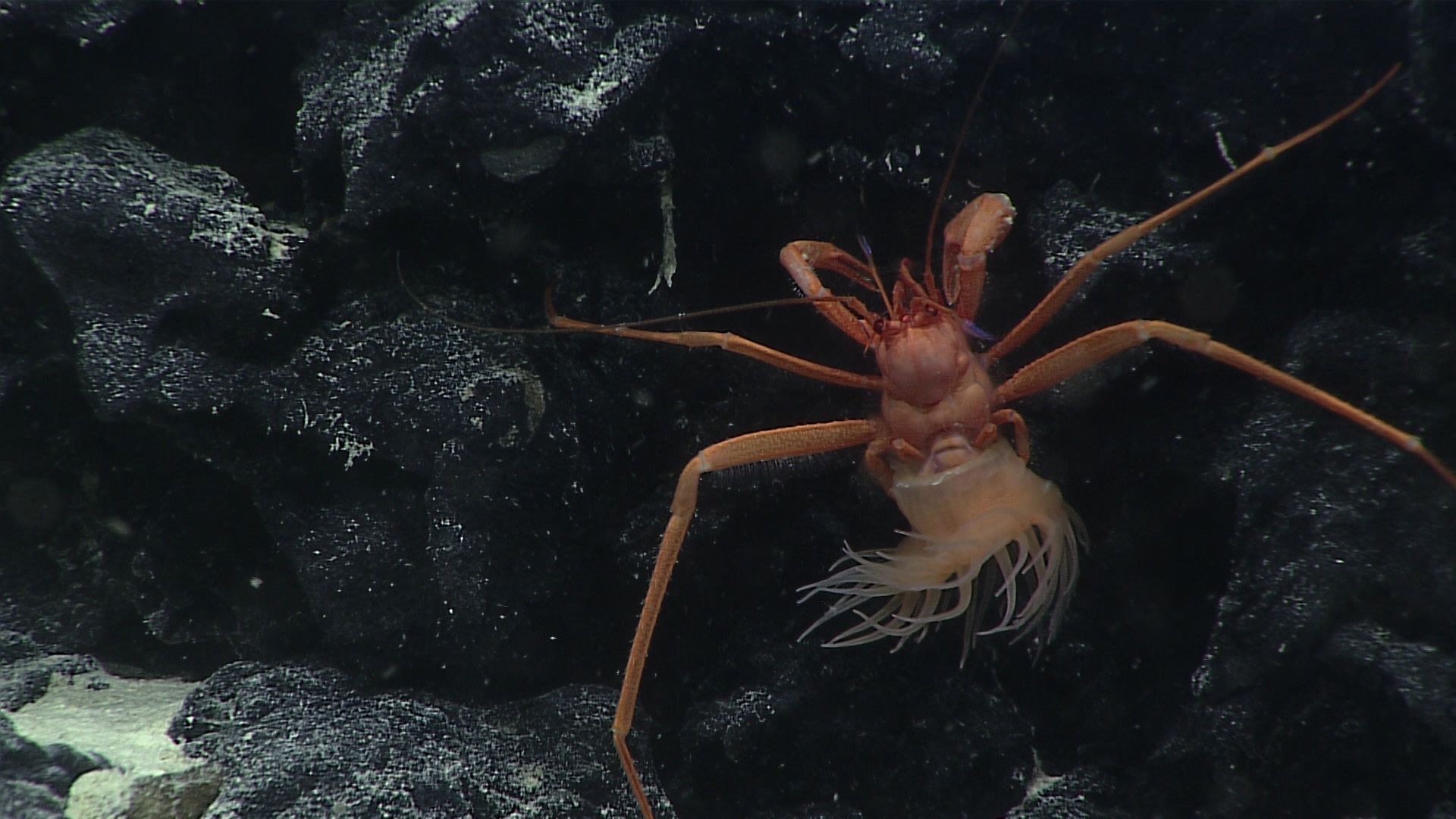
“If deep-sea mining happens, and that thing kind of drives whales in a different course, then we’re going to get lost, too,” Castro said, noting that traditional wayfinding knowledge has only recently been revived in the Marianas after centuries of colonial disruption.
Reflecting on the stark power imbalance between island communities and the federal government, Castro expressed a weary resignation common among territorial residents.
“We do have a say-so, but it’s not going to be entertained,” he said. “We’re small compared to Uncle Sam, who makes the rules.”