
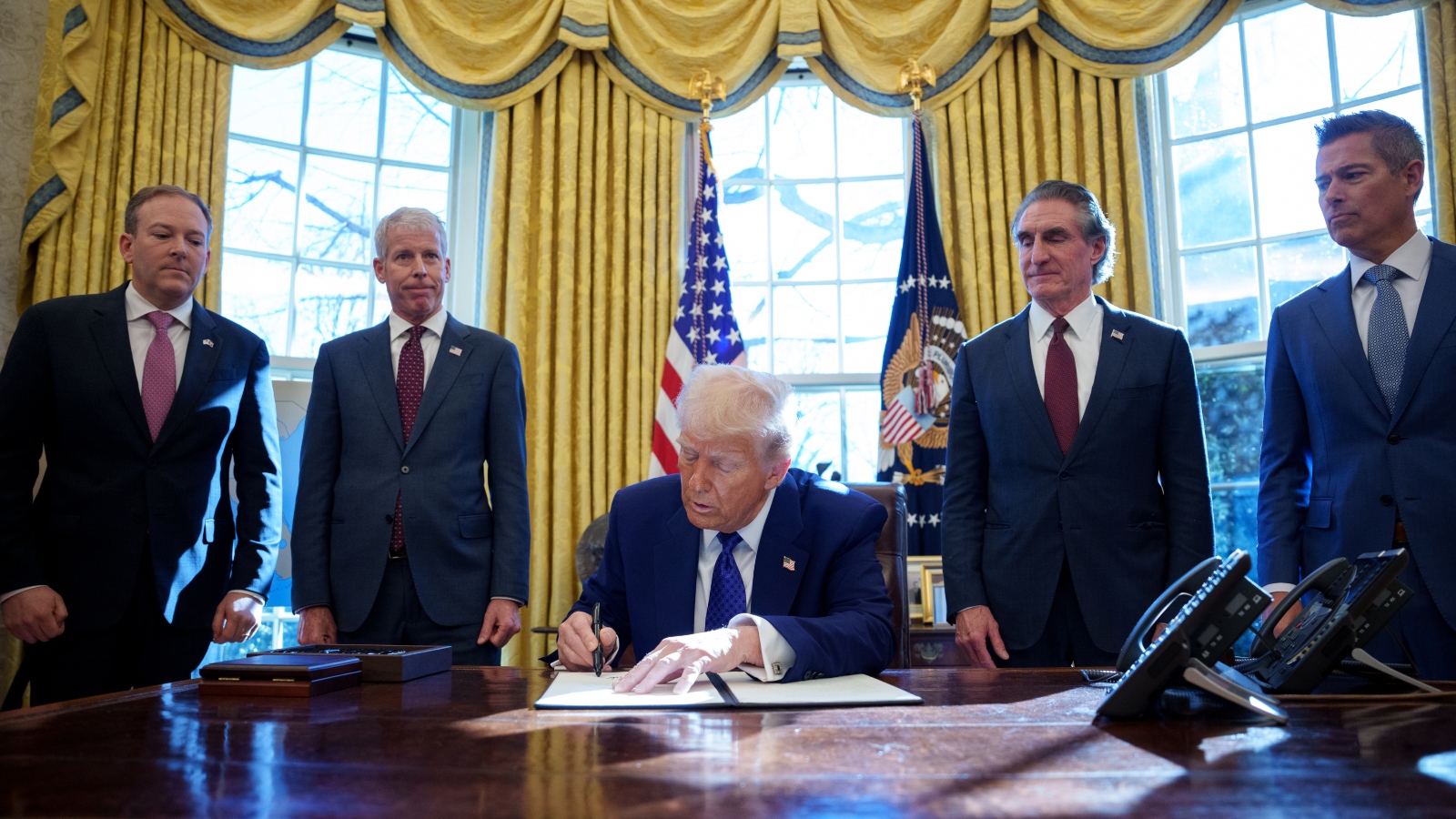
On the very first day of his second term, President Donald Trump stepped into the Oval Office and signed an executive order declaring that the United States was facing a severe "national energy emergency." In the text of the directive, he laid the blame squarely at the feet of his predecessor, writing that the "harmful and shortsighted policies of the previous administration" had left the nation’s vital energy resources "far too inadequate." According to the president, this shortfall was the primary catalyst driving up costs, a situation that "causes and makes worse the high energy prices that devastate Americans."
Armed with this declaration, the administration set out to leverage sweeping executive powers. The strategy focused on two main fronts: attempting to fast-track permits for domestic fossil fuel development and issuing emergency directives to bolster the national power grid with conventional energy resources. The overarching promise was clear: by unleashing domestic production and overriding regulatory hurdles, the White House would bring down soaring costs and relieve financial pressure on everyday households.
Yet, nearly two years later, as President Trump stares down the high-stakes political landscape of a midterm election cycle, his administration’s signature emergency claim carries a sharp, ironic resonance. The United States is indeed grappling with an energy crisis marked by painful fuel prices, but it bears little resemblance to the scenario the president described when he took office. Furthermore, the expansive executive authorities unlocked by his emergency order have proven largely ineffective at mitigating the current economic turbulence or lowering the stubborn utility and fuel costs that he vowed to eradicate.
"The genesis of the problem is the war in Iran," explained Gbenga Ajilore, chief economist at the Center on Budget and Policy Priorities, a nonpartisan economic think tank that has closely analyzed the administration’s energy portfolio.
Military conflict in the Middle East has profoundly disrupted global markets. Trump’s direct military actions against Iran have resulted in the closure of the critical Strait of Hormuz alongside the physical destruction of key refineries and oil fields across the region. Consequently, the global supply of refined petroleum products—specifically gasoline and diesel—has plummeted. This acute supply crunch for refined fuels has proven even more severe than the market tightness for crude oil, landing a direct and painful blow to consumer wallets across the United States.
This stark reality highlights an unforgiving truth about the sheer scale and complexity of the global fossil fuel system. Despite possessing broad executive authority, the Trump administration has been unable to exert meaningful downward pressure on consumer prices for petroleum fuels or electricity. While federal muscle has successfully pushed through specific oil drilling initiatives and kept select aging power plants operational, the global markets for oil and power are so vast, interconnected, and complex that these localized interventions have produced virtually no discernible impact on retail prices.
According to economic analysts, short of a diplomatic or military resolution to the conflict in Iran, there are very few policy levers available to the executive branch to alter the trajectory of consumer costs.
"If you reverse that, it may not drop like a rock, but it’s going to start going down," Ajilore noted, referring to the geopolitical conflict. "Outside of that, there really isn’t much to do."
Electricity: Keeping coal plants running
The practical, on-the-ground impacts of the president’s energy emergency declaration have primarily targeted two segments of the energy infrastructure where the administration clashed most aggressively with the policies of former President Joe Biden. The first battleground is the nation’s power grid. During his tenure, Biden pursued a strategy aimed at deploying massive new capacities of solar and wind generation, even as soaring electricity demand driven by power-hungry data centers strained local grids. On the 2024 campaign trail, Trump made ambitious pledges to cut consumer electricity bills in half, subsequently directing federal agencies to identify and utilize every available emergency authority to ramp up power generation.
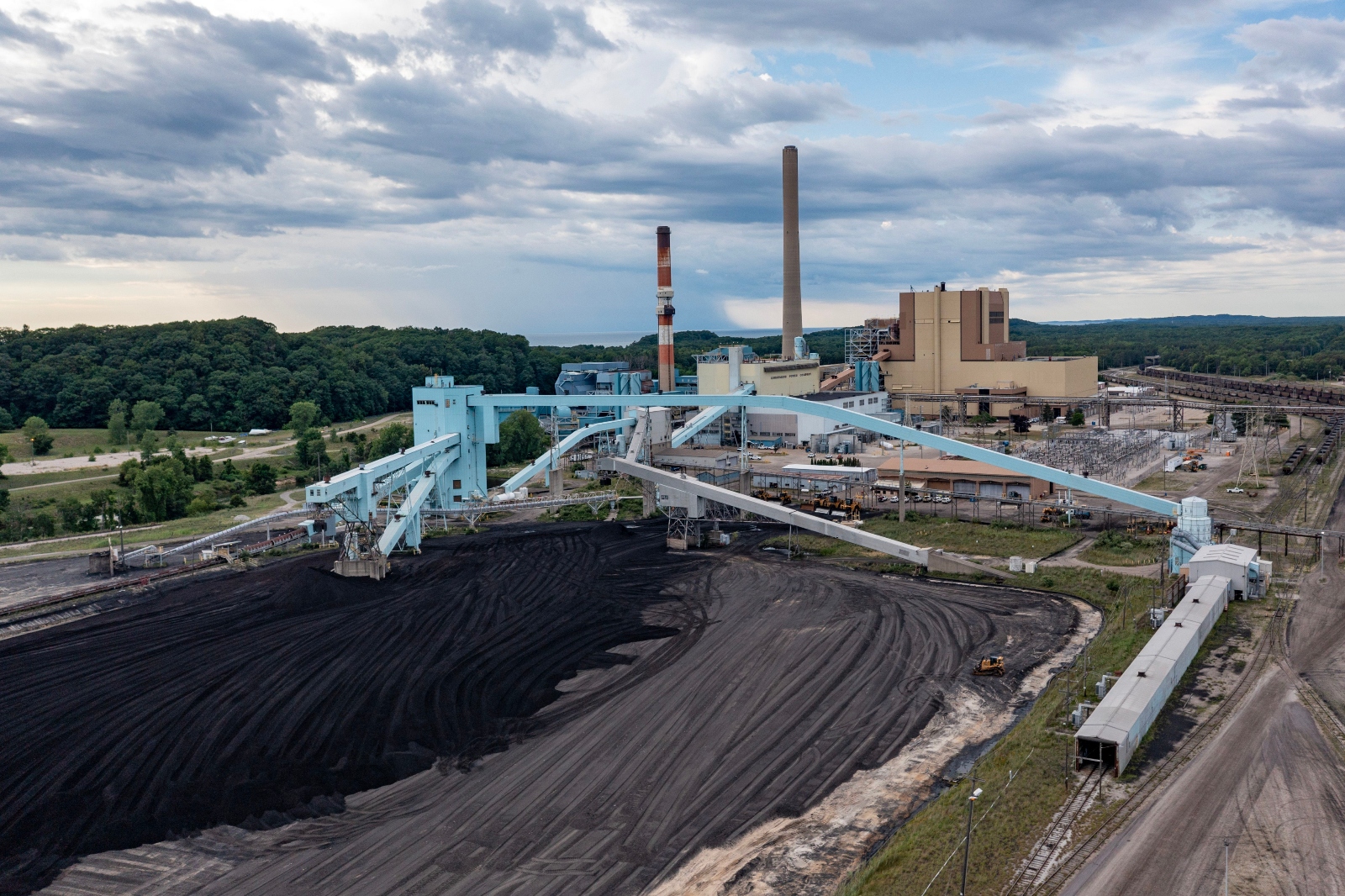
The Department of Energy embraced the directive immediately. Energy Secretary Chris Wright, a vocal and longtime champion of fossil fuels, utilized emergency powers to issue a series of binding orders preventing the scheduled retirement of aging coal-fired power plants across the country. Secretary Wright argued in these regulatory filings that strained grid conditions necessitated preserving every megawatt of available power capacity, overriding the intentions of the private utilities that owned and operated the facilities and sought to shutter them.
Rather than lowering energy bills, however, these emergency interventions have generated significant financial burdens for ratepayers. In Michigan, keeping the aging J.H. Campbell coal plant open past its planned retirement date has cost regional ratepayers nearly $300 million on net, even though the facility has been generating far less power than it did historically. In Colorado, a regional utility was forced to continue operating a coal plant slated for retirement despite the facility being structurally degraded and in desperate need of extensive, costly maintenance. In numerous instances across the country, these retiring facilities represented some of the oldest and least efficient infrastructure within their respective regional grids, meaning their forced preservation added operational costs without delivering economic relief to consumers.
Eventually, the judiciary began to scrutinize the administration’s reliance on emergency authorities. In September, following a legal challenge brought by the state of Michigan over the federal mandate keeping the J.H. Campbell plant online, a federal appellate court blocked the Department of Energy’s order. The court decisively rejected the administration’s interpretation of federal law and its underlying claims of a regional energy emergency. The presiding judge dismissed Secretary Wright’s emergency assertions as "unpersuasive," writing that the administration’s strategy "invites frequent federal interventions that […] threaten the stability of the energy market."
"We saw in the Michigan case that the facts just don’t match up with the claims and with the law, and I suspect that in some of these other cases, if not all of them, we’ll see similar decisions," said Melissa Birchard, mitigation program director at the Georgetown Climate Center, a research institute based at Georgetown Law School. Notably, both the state’s utility commission and the regional grid operator had previously rejected the premise that an energy shortage existed in the area surrounding the Campbell plant.
Crude oil: Drill, baby, drill
The second major sector targeted by the emergency declaration was oil and gas development, where the administration sought to systematically dismantle Biden-era environmental restrictions. Here, too, the emergency narrative clashed with underlying market conditions: domestic oil and natural gas production were already hovering near all-time historic highs. While the Biden administration had approved certain major fossil fuel projects—such as the massive Willow drilling venture in Alaska—it simultaneously moved to block new oil leases in the Gulf of Mexico and canceled the long-contested Keystone XL pipeline.
Trump’s executive order sought to steamroll environmental reviews and procedural permitting delays that have traditionally slowed energy infrastructure development. The directive instructed federal agencies to deploy all relevant emergency powers to expedite the construction of new oil wells, pipelines, and associated processing facilities, while actively attempting to waive compliance with the Clean Water Act and the Endangered Species Act wherever legally possible.
The policy produced a few high-profile victories for the domestic fossil fuel industry. Earlier in the year, the administration convened what is formally known as the "God Squad"—an interagency committee of Cabinet secretaries endowed with the statutory authority to override the Endangered Species Act. In a meeting lasting only minutes, the committee waived species protections for oil and gas leasing and drilling across the Gulf of Mexico, clearing the path for BP to advance a deepwater drilling initiative known as the Kaskida project.
Concurrently, the U.S. Army Corps of Engineers was directed to accelerate permitting processes for pipelines and energy infrastructure under the Clean Water Act. The agency initially compiled a fast-track list of approximately 600 projects eligible for expedited administrative review. Although that specific list was later withdrawn, numerous individual projects remaining on the Corps’ public permitting database retained an "energy emergency" designation. These include Enbridge’s Line 5 oil pipeline replacement project, a mineral sands mining operation owned by Chemours, and a proposed natural gas pipeline in Florida.
While these initiatives pleased industry advocates, economists and energy analysts point out that expediting these projects will do nothing to alleviate the short-term high prices cited in the president’s emergency declaration. Large-scale developments like the Kaskida deepwater project require years of capital investment and engineering before producing a single barrel of oil, and even when operational, their output represents only a fraction of the petroleum volume that routinely moves through the Strait of Hormuz in a standard month.
Legal challenges have also proliferated. In addition to Michigan’s lawsuit over the Campbell coal plant, roughly a dozen states filed coordinated legal challenges against the administration’s overarching executive order, arguing that no genuine national energy emergency exists to justify sweeping aside environmental statutes. With oral arguments scheduled, legal scholars like Birchard anticipate that the federal judiciary will view the administration’s expanding catalog of emergency declarations with deep skepticism.
"We see this accumulated effort to declare emergencies," Birchard observed. The central question facing the courts, she noted, is whether a recognizable pattern of multiple, concurrent emergencies can be sustained by a coherent factual record.
Refineries: The weak link
While the administration focused its emergency authorities on grid power and upstream oil extraction, a completely different crisis was unfolding in a segment of the energy sector largely untouched by the executive order: petroleum refining. Both the United States and international markets have faced a severe supply shortage of refined petroleum products like gasoline and diesel. This bottleneck has driven retail pump prices well above $4 a gallon nationally, while diesel prices surged to historic highs exceeding $6 a gallon. Consequently, the economic metric known as the "crack spread"—the market price difference between crude oil and refined petroleum products—climbed to multi-year highs over the summer, driving up freight and logistics costs across the broader economy.
The root cause of this domestic price spike lies primarily in geopolitical conflict. The war in Iran closed the Strait of Hormuz and destroyed numerous Middle Eastern refineries, while ongoing military strikes in Eastern Europe damaged multiple oil refineries in Russia. Although international diplomacy and U.S. military escort operations successfully restored the flow of crude oil tankers through the Strait of Hormuz over the subsequent months, and major producers like Saudi Arabia found alternative export routes to avert a global crude shortage, consumers do not purchase raw crude oil. They purchase finished gasoline and diesel, products that require complex processing at massive industrial refineries.
The federal government has found itself with virtually no effective tools to address this processing bottleneck. Domestic refineries were already operating at or near maximum physical capacity to capitalize on high market profit margins, with many operators even postponing mandatory scheduled maintenance to maintain continuous production.
"Refiners are running close to flat out," said Abhi Rajendran, head of research at Energy Intelligence. "They’re making money, but there’s not really any kind of slack to ramp things up."
Expanding the nation’s refining capacity presents formidable economic and logistical barriers. Building a modern petroleum refinery requires billions of dollars in capital investment, and the domestic refining landscape has experienced a long-term contraction as modern vehicles achieve higher fuel efficiency and consumers increasingly adopt electric vehicles. Because the domestic refining network normally features adequate capacity for standard market conditions, energy companies see little financial justification for investing billions in new facilities that could become obsolete if geopolitical conflicts resolve.
"Refined product demand has actually been in decline for a long time," Rajendran explained. "In normal times, [refinery capacity] is more than adequate. There’s no real economic case for new refineries, because if these wars end, then it’s just wasted money."
Although the president’s original executive order mentioned the refining sector, it contained no actionable mechanisms to expand processing capacity. This left the administration scrambling for alternative interventions. Proposals such as a potential diesel export ban—intended to keep refined fuel inside the United States—were ultimately shelved following intense pushback from the domestic oil and gas industry, as trade groups warned the move could paradoxically depress refining margins and prompt operators to curtail production further.
Other administration initiatives, such as exploring short-term diesel imports from Russia and encouraging state-level tax subsidies for commercial diesel, offer negligible relief. For instance, the total volume of diesel promised under recent diplomatic arrangements amounted to less than a single day’s total national consumption in the United States.
Ultimately, barring a major diplomatic or military breakthrough in the Middle East, high fuel prices appear positioned to persist through the remainder of the year. While state attorneys general argue in court that high commodity prices do not legally constitute a national emergency, polling data indicates that the financial strain of soaring utility and gasoline bills is weighing heavily on the American public. Recent public opinion surveys show that an overwhelming majority of Americans remain deeply concerned about the cost of living, with consumer sentiment indices hovering near historic lows. Furthermore, public opinion data underscores that a significant majority of voters hold the current administration politically accountable for the ongoing economic pressures as the midterm elections draw near.