
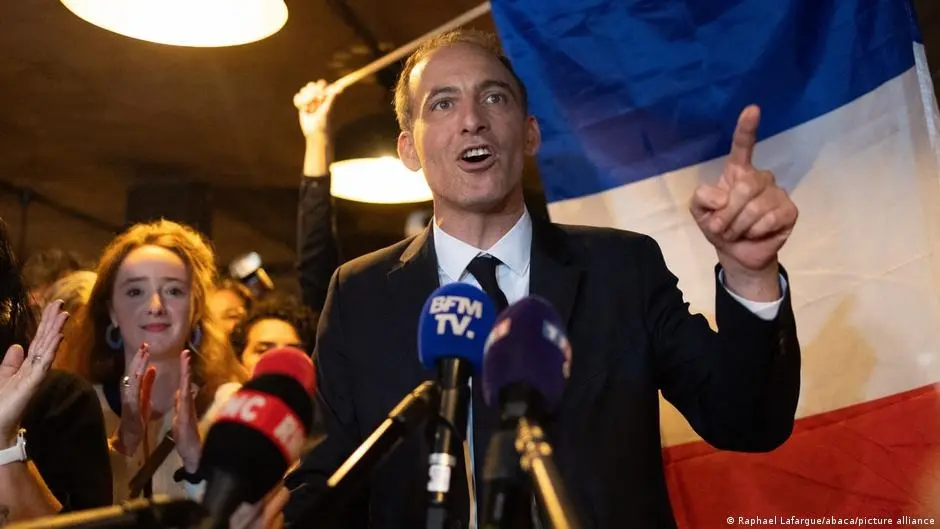
The historically working-class Parisian neighborhood of Belleville, which has undergone significant gentrification in recent years, served as the backdrop for a pivotal moment in the trajectory of the French left. It was here, inside the Cantine de Belleville restaurant, that Raphaël Glucksmann gathered with supporters on October 11 to celebrate an overwhelming victory in the Socialist Party’s presidential primary.
While party organizers and political observers had widely anticipated a protracted two-round contest, the 46-year-old Member of the European Parliament managed to bypass the runoff altogether. The son of the late renowned philosopher and essayist André Glucksmann secured a convincing 66% of the vote in the very first round, formally establishing himself as the Socialist standard-bearer for France’s 2027 presidential election.
Yet the jubilant mood inside the venue came to an abrupt halt the moment Glucksmann stepped out into the Parisian street. As he exited the restaurant, an unidentified assailant struck him with a flour bomb, coating the candidate, passersby, and a nearby black taxi cab in a thick layer of white powder.
The following morning, Glucksmann addressed the confrontation directly, calling on his prominent leftist rival, Jean-Luc Mélenchon, to publicly condemn attacks carried out by his supporters. However, there has been no official confirmation that the individual responsible for the flouring was in fact affiliated with Mélenchon’s radical left movement, La France Insoumise (LFI).
Regardless of the perpetrator’s true identity, the episode immediately laid bare the central strategic dilemma that threatens to shadow Glucksmann’s presidential campaign in the months ahead: how the newly minted Socialist nominee can realistically assemble a winning coalition that includes Mélenchon’s substantial base of supporters, even as he steadfastly refuses to align or cooperate with their leader.
Glucksmann’s Rapid Rise
Throughout the Socialist Party’s internal campaign, one overarching dilemma dominated nearly every debate, interview, and town hall: "Where do you stand on Mélenchon?"
The question cut to the core of the existential debate dividing the French left. Socialist Party leader Olivier Faure had long advocated for keeping the door open to dialogue and potential electoral arrangements with La France Insoumise, arguing that only a broad front could realistically prevent the right or far right from capturing the Élysée Palace.
Glucksmann, by contrast, campaigned on a radically different premise, demanding an unambiguous and total break with the populist far left. Given his resounding first-round victory, the primary results are widely interpreted not merely as an endorsement of Glucksmann as an individual, but as a definitive mandate from the Socialist rank-and-file for a sharp political demarcation from Mélenchon.
That Glucksmann carried the nomination so convincingly is all the more striking given the persistent criticisms leveled against him by party veterans throughout the primary process. Several opponents repeatedly questioned his political track record and executive competence. Ségolène Royal, the Socialist Party’s 2007 presidential nominee and a former government minister, openly mocked his bid for the presidency, famously comparing his ambition to that of an "intern" who suddenly expects to take the helm of a major company. Royal stressed that Glucksmann possesses neither governmental cabinet experience nor a background in administering a local municipality or regional authority.
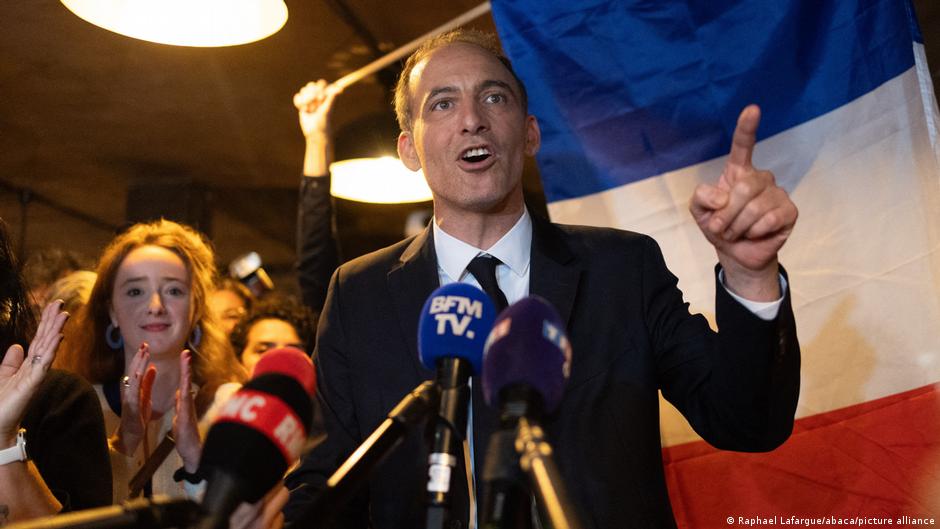
Furthermore, the Socialists find themselves in the unusual position of banking their political resurrection on a candidate who is not even an official member of their party. Glucksmann is instead the co-founder and figurehead of Place Publique, a small center-left political formation. Entrusting the Socialist banner to an outsider underscores just how desperate the party has become to escape its recent cycle of political marginalization.
Despite his decisive internal victory, Glucksmann faces an exceptionally steep climb on the national stage. A survey conducted by Toluna Harris Interactive and published the day after his primary triumph projected that he would capture only 10% to 11% of the vote in the initial round of the presidential election. In contrast, the same poll credited Mélenchon with 18%, suggesting that the veteran populist remains in a far stronger position to qualify for the high-stakes second-round runoff.
While the survey carries the caveat of having been conducted just before Glucksmann secured the primary win—meaning it does not capture any immediate momentum or name-recognition boost generated by his nomination—the figures nevertheless underline the scale of the challenge ahead. At the same time, securing roughly 10% of the national vote would still mark a notable recovery for the Socialists, whose 2022 presidential candidate, Paris Mayor Anne Hidalgo, suffered a historic collapse when she scraped together a mere 1.75% of the vote.
Mélenchon’s Youth Appeal
If Glucksmann hopes to significantly expand his footprint beyond single digits, he will need to find a way to dismantle Mélenchon’s formidable appeal among France’s younger demographics.
An Ipsos survey conducted in September painted a stark picture of the generational divide. In a hypothetical presidential contest pitting Glucksmann as the representative of social democracy and former Prime Minister Édouard Philippe as the standard-bearer for the political center, Mélenchon commanded an overwhelming 41% of the vote among citizens under the age of 25. By comparison, far-right National Rally leader Marine Le Pen captured 20% of the youth vote. While the figures illustrate that young French voters are sharply polarized between radical political alternatives, they demonstrate with equal clarity that Mélenchon maintains an unrivaled hegemony over the youthful left.
The 75-year-old leader of La France Insoumise has continually nurtured this relationship by aligning himself directly with student movements that have recently captured national and international headlines. At a high-profile mobilization near Clermont-Ferrand in central France, Mélenchon stood shoulder-to-shoulder with striking students, expressing full solidarity with their ongoing protests. During his appearance, he used the platform to renew several of his hallmark youth-focused proposals, including lowering the national voting age to 16 and entirely dismantling Parcoursup, the highly contested online admissions platform used to allocate places in French higher education institutions.
The nature of this youth support was closely evaluated in an analytical study conducted by political scientist Antoine Bristielle for the Fondation Jean-Jaurès, a think tank closely aligned with the Socialist Party. In his research, Bristielle draws a clear distinction between the deeply committed, unwavering core of La France Insoumise supporters and the wider left-leaning public.
According to Bristielle’s findings, Mélenchon’s most reliable base consists predominantly of well-educated, urban youths who are grappling with acute economic insecurity. In fact, four out of ten households within this core demographic survive on a net monthly income of less than €2,000 (roughly $2,200), making cost-of-living grievances a central driver of their political behavior.
Crucially for Glucksmann, however, the study also identifies a critical opening. Bristielle estimates that nearly a third of the broader left-wing electorate prioritizes an overall left-wing victory at the ballot box over institutional loyalty to any single party or leader. Almost half of the voters in this flexible segment are under the age of 35 and have stated an openness to voting across traditional divides—whether for the Socialists, the Greens, or La France Insoumise. While aggressive wealth redistribution and strong state intervention remain essential priorities for this cohort, a decisive majority indicate that they would prefer candidates and leaders who demonstrate a practical willingness to seek compromise.

Glucksmann’s Youth Efforts
As Glucksmann formulates his strategy to chip away at Mélenchon’s youth dominance, demographic data suggests he cannot rely on standard European voting patterns.
Recent elections in neighboring Germany have revealed a pronounced gender divide among younger citizens, with young women disproportionately backing left-wing parties while young men drift toward the political right. However, empirical research indicates this trend has not materialized in France. Political scientists Anja Durovic, Nonna Mayer, and Noémie Piolat analyzed voter behavior during the 2024 European and French parliamentary elections and discovered that young French women were neither significantly more inclined to vote for the left nor notably less likely to support the far right than their male peers. Whether this gender parity across ideological lines will persist through the 2027 presidential contest remains one of the major open questions of the campaign cycle.
To bridge the gap, Glucksmann has begun crafting an economic and civic program tailored to appeal to both younger workers and mainstream voters. His economic platform pledges to ease the fiscal burden on earned wages by reducing the Contribution Sociale Généralisée (CSG), a broad-based social security levy that impacts salaried workers. To offset that reduction, Glucksmann advocates raising taxes on inheritances valued at over €2 million, framing the proposal as a measure to tackle generational inequality while protecting ordinary working incomes.
At the same time, Glucksmann is leaning heavily into an unreservedly pro-European, internationalist identity—a posture that presents a striking contrast to Mélenchon, who has frequently denounced the European Union as an inherently neoliberal structure that curtails national sovereignty. By pairing domestic social-democratic welfare policies with an unapologetically pro-integrationist foreign policy, Glucksmann is cultivating an ideological profile designed not only to reclaim moderate left-wing voters, but also to draw support from centrist voters currently aligned with President Emmanuel Macron.
Nowhere is the philosophical gulf between Glucksmann and Mélenchon wider than on the question of the war in Ukraine. Glucksmann has consistently championed robust, decisive military and financial support for the government in Kyiv, presenting European solidarity against Russian aggression as an absolute moral imperative.
Conversely, Mélenchon’s party has adopted a deeply skeptical and cautious approach. Manon Aubry, an MEP representing La France Insoumise in the European Parliament, has maintained that any French military assistance must be strictly conditional. Aubry argues that aid packages must be subjected to transparent democratic debate, must not permit strikes targeted deep within Russian territory, and must under no circumstances compromise the readiness or capabilities of France’s own armed forces. This fundamental divergence was made concrete in early 2024, when LFI lawmakers voted against the bilateral Franco-Ukrainian security cooperation agreement in the National Assembly.
The deep-seated animosity between the two factions was visibly reignited in the hours following the flour attack outside the Belleville restaurant. While Glucksmann attempted to frame the incident as an example of political intimidation linked to the populist left, figures within La France Insoumise reacted with public derision. Sebastien Delogu, an LFI lawmaker, took to the social media platform X to post a message expressing his sympathies not for the targeted candidate, but exclusively for the taxi driver tasked with cleaning the flour from his vehicle.
The abrasive exchange served as an early reminder of the toxic dynamics currently paralyzing the broader French left. For Glucksmann, securing the Socialist nomination may well prove to be the simplest phase of his bid for national leadership. To transform his primary win into a viable path toward the presidency, he must convincingly attract hundreds of thousands of voters currently loyal to Mélenchon’s camp—an endeavor that will require far more than merely keeping the far-left leader at arm’s length.