
As senators prepare to pack their bags and head back to their home states to campaign ahead of the high-stakes midterm elections, a dedicated bipartisan group has been racing against the clock to finalize a deal that energy analysts and lawmakers alike consider vital to securing the nation’s energy future.
The core of the matter centers on a long-desired permitting reform bill designed to streamline the notoriously sluggish process of building new energy infrastructure across the United States. Proponents of the legislation view the issue with mounting urgency, pointing to a dramatic surge in electricity demand nationwide. This unprecedented spike is being driven in large part by the technology industry’s aggressive expansion of massive data centers to support advanced computing and artificial intelligence.
“America’s energy demand is surging due to advanced technology and manufacturing, but our outdated federal permitting process remains a massive barrier to building the infrastructure we need to stay competitive,” said Senator Marsha Blackburn, a Republican from Tennessee, in an August press release backing the legislative push.
Despite broad agreement in Washington that the current system is broken, the bill faces an uphill battle when it comes to public perception, largely due to a severe public relations hurdle. According to Alex Lundry, president of the Washington, D.C.-based public opinion research firm Redbud Consulting, data centers have become a toxic subject for average voters. Recent public polling indicates that Democrats, Republicans, and independents alike harbor deep, widespread opposition to having data centers constructed within their local communities.
This dynamic places lawmakers—many of whom are fighting for their political survival in the upcoming November elections—in a difficult bind. While they recognize an urgent need to expand electrical infrastructure to accommodate the sweeping data center boom and broader economic growth, they are acutely aware of the political peril of associating permitting reform directly with data centers.
“If you phrase permitting reform as serving data centers, the polling results get way worse,” Lundry noted.
Yet, the draft legislation remains one of the rare areas where congressional Republicans and Democrats have managed to find common ground. Both parties agree that the nation’s energy permitting mechanism is fundamentally dysfunctional. Industry leaders have long complained that complex studies evaluating project impacts, lengthy and overlapping reviews by multiple federal agencies, and relentless legal challenges from environmental groups and local opponents consistently stall and disrupt energy projects of every variety.
Lawmakers have spent years attempting to overhaul the system. The most recent major legislative vehicle, the Energy Permitting Reform Act of 2024, successfully made it out of committee but ultimately stalled before ever receiving a full floor vote in the Senate. Today, however, lawmakers from both sides of the aisle argue that the rapidly accelerating power demand has injected this latest legislative push with a level of momentum unmatched by any previous effort. The highest-ranking members of both parties serving on the Senate’s two energy-related committees have taken the lead, directly negotiating the specific language of the bill.
Complicating the legislative calculus further are signals from the executive branch. President Donald Trump has indicated a willingness to stop blocking renewable energy projects if it helps entice Democrats to support a comprehensive permitting deal. For months, Democrats have harbored deep-seated anxieties that even if new laws make it legally easier to construct renewable energy facilities, the White House could continue to obstruct them in practice. These lingering doubts have served as a persistent friction point in negotiations.
“I appreciate very much what the Trump administration has done to move in this direction, but in order to brief colleagues on what this really means, we need just a bit more clarity on exactly what return to regular order for wind and solar projects looks like,” Senator Sheldon Whitehouse, a Democrat from Rhode Island and the top-ranking Democrat on the Senate Environment and Public Works Committee, told reporters. He added that while those details remain unresolved, he believes clarity can be achieved in fairly short order.
Even with ongoing discussions, Politico reported that senators intend to finish hammering out the finer points of the bill after the midterm elections conclude. Delaying the final push means the legislation will likely have to compete with a crowded slate of other priorities, a challenge that could be compounded depending on the outcome of the elections and potential shifts in congressional control.
While the precise contents of the draft bill remain private, key stakeholders and industry insiders anticipate that the legislation would make it significantly easier to construct energy projects by narrowing the scope of potential environmental and social impacts that government agencies are legally required to consider during the permitting process. Furthermore, the bill is expected to loosen provisions under the Clean Water Act and the Endangered Species Act that frequently slow down the permitting of crucial transmission lines and pipelines, while also shielding successfully issued permits from protracted post-issuance lawsuits.
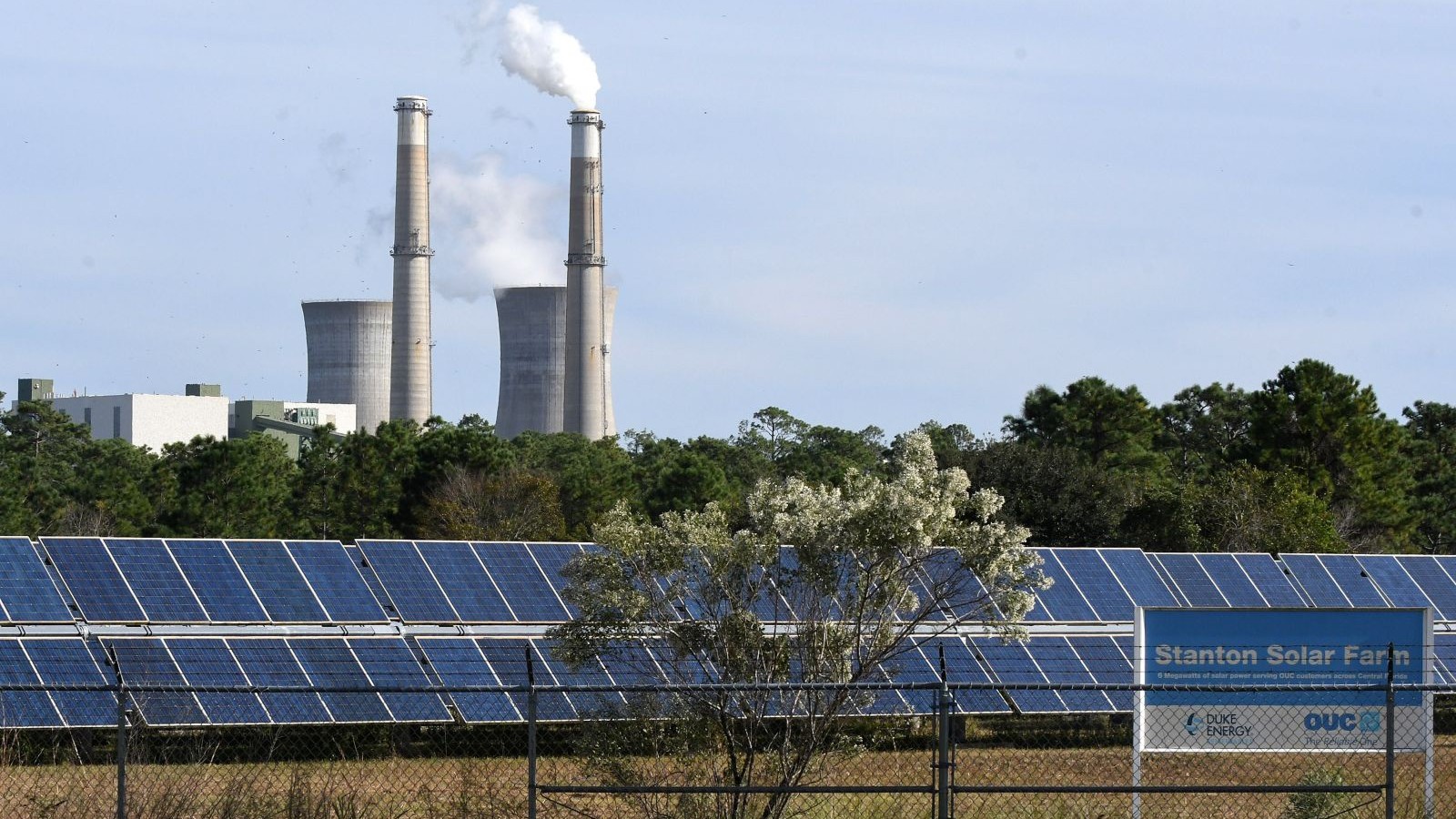
Such sweeping reforms would ease the path to construction for both renewable energy installations and fossil fuel infrastructure, with a particular emphasis on solar power and natural gas—the two energy sources currently experiencing the strongest market momentum. According to federal energy data, solar power and battery storage systems account for nearly 80 percent of all new power generation projected to be built across the United States. Meanwhile, natural gas remained the single largest source of electricity generation nationwide, with projections indicating continued long-term growth. Natural gas has increasingly become the fuel of choice for powering energy-hungry data centers, which are expected to consume vast quantities of gas-generated electricity over the coming decade.
Unsurprisingly, both the solar and natural gas industries have thrown their weight behind the push for permitting reform. Tim Pawlenty, president of the Solar Energy Industry Association, famously warned that the nation’s energy development pipeline would remain severely constrained without legislative intervention.
The pressure on the grid goes far beyond the rapid expansion of Big Tech. A colossal surge in electricity demand had been anticipated by energy experts long before data centers began multiplying. Across the country, Americans are increasingly electrifying their daily lives by adopting heat pumps, advanced electrical appliances, and electric vehicles—all vital steps in reducing national carbon emissions. At the same time, the widespread energy savings once provided by the proliferation of efficient lightbulbs and household fixtures during the 2010s have largely leveled off, leaving baseline demand climbing.
Compounding these factors, the United States has pursued aggressive industrial policies aimed at bringing manufacturing operations back to domestic shores, an endeavor that will require immense amounts of reliable electricity to succeed. While data centers are undeniably accelerating and intensifying this power-demand spike—putting a strain on regional grids and supply chains—major tech developers like Google have actively joined the lobbying effort to secure permitting reform.
Environmental advocacy groups, such as the Natural Resources Defense Council, have pushed for solutions that can accelerate renewable energy development without dismantling bedrock environmental protections. NRDC leadership has advocated for comprehensive land-use planning that simplifies the siting of renewable projects while safeguarding fragile local ecosystems. Democratic lawmakers, however, have found themselves weighing compromises on traditional environmental safeguards in exchange for securing grid reliability and expanding renewable energy deployment. On the other side of the aisle, many Republicans—some of whom have expressed skepticism regarding the severity of climate change—are primarily focused on unlocking energy production to fuel broader economic growth.
Beneath the domestic policy debates lies another powerful driver for lawmakers in both parties: a profound anxiety that failing to support data centers and the artificial intelligence systems they power could allow strategic competitors, particularly China, to eclipse the United States economically and militarily. During the Clean Energy Week conference held in Washington, D.C., Trump administration officials, bipartisan legislators, and energy industry executives repeatedly emphasized the necessity of achieving American energy dominance through aggressive infrastructure build-outs.
“While Communist China cuts corners to get ahead, a mountain of red tape has America fighting the energy war with one hand tied behind our backs,” said Senator Rick Scott in a statement.
Despite these national security arguments, pollsters caution that public resonance for such messaging may be waning. Lundry noted that framing reforms purely around competition with China no longer carries the persuasive weight it once did with everyday voters.
Instead, polling data suggests that lawmakers would find more success by casting permitting reform as a direct boon for clean energy and consumer costs. Redbud Consulting’s September poll revealed that 71 percent of respondents agree that increasing the share of renewable energy in the national supply is the correct path forward. Additionally, economic pressures weigh heavily on the electorate, with 70 percent of survey participants reporting that their household energy bills have risen over the past year.
Legislators in the other chamber of Congress have already begun reacting to these distinct public anxieties regarding data center expansion and escalating utility costs. Just days before Senate negotiators announced they were nearing a draft agreement, the House of Representatives passed a bill urging states to compel data center operators to finance their own dedicated electricity generation facilities. The measure is designed to shield ordinary ratepayers from shouldering the financial burden of the immense power loads drawn by data centers. That legislation is currently stalled in the Senate, where some Democratic members have criticized the approach as insufficiently stringent.